
Plastics and resins
Discuss the resin system, particle-size distribution and processing conditions for filler evaluation.
Industrial mineral
Compare cosmetic, nano, super-fine and application-specific talc models for formulation and purchasing enquiries.
PRODUCT OVERVIEW
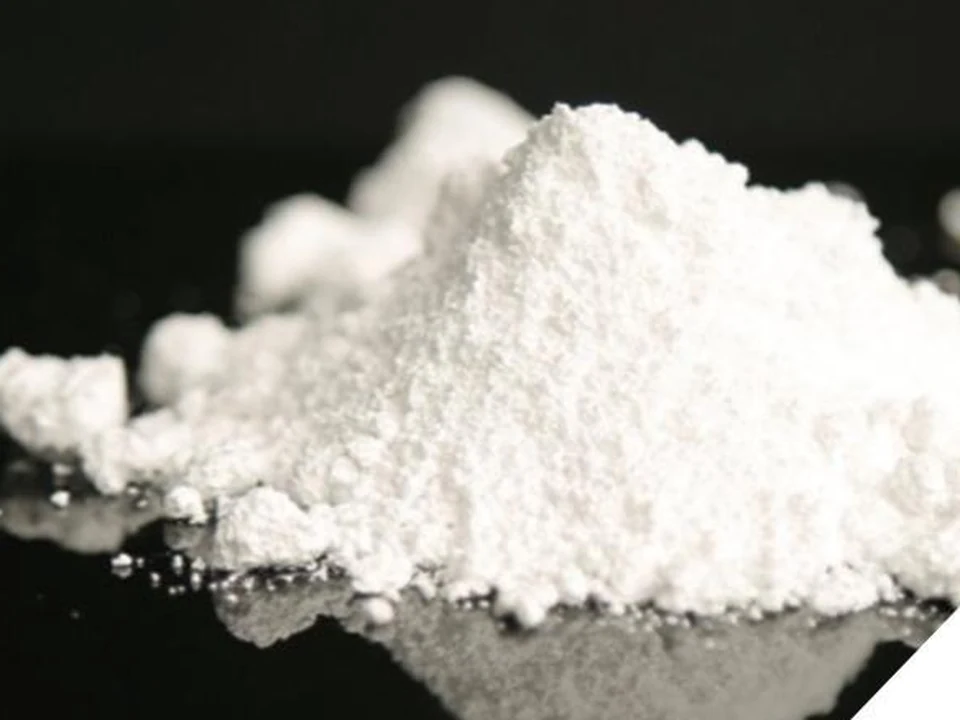
Talc is a layered hydrated magnesium silicate mineral. The brochure presents several particle-size families and processed types for industrial and cosmetic formulation evaluation.
APPLICATION AREAS
Tell us your process, selected model and acceptance criteria.
Discuss the resin system, particle-size distribution and processing conditions for filler evaluation.
Compare grade data and trial dispersion in the intended binder and medium.
Review the selected model, impurity evidence, asbestos documentation and destination-market requirements.
Specify your application and acceptance criteria when comparing the listed models.
MODELS & REFERENCE SPECIFICATIONS
Model values are brochure references. Match the product family, model and measurement conditions before agreeing an order specification. The supplied tables do not identify test standards or complete methods.
Scroll each table sideways on smaller screens. A dash marks a blank cell in the brochure.
Talc types described for evaluation in powders and other cosmetic formulations.
| Model | Whiteness% | 325 mesh sieve residue% | Particle size D50μm | BET specific surface aream²/g | Oil absorptionml/100g | Apparent densityg/ml | Enquiry |
|---|---|---|---|---|---|---|---|
| LU-R | ≥93 | ≤5 | 33±3 | 2.2 | 21 | 0.50 | Enquire |
| LU-V | 96±3 | ≤3 | 24±3 | 3.0 | 23 | 0.35 | Enquire |
| MS-KYC | 92±3 | ≤1 | 22±3 | 2.5 | 22.0 | 0.55 | Enquire |
| ROSE TALC | 93±3 | ≤0.5 | 16±3 | 4.88 | 25.0 | 0.40 | Enquire |
| LU-J1 | 96±3 | ≤0.01 | 11±1.5 | 6 | 30.0 | 0.25 | Enquire |
| C-R1 | ≥93 | ≤0.2 | 11±0.5 | 5.80 | 29.0 | 0.36 | Enquire |
| LU-2 | 96±3 | ≤0.01 | 7±1 | 7 | 36.0 | 0.18 | Enquire |
| P-2C | ≥94 | ≤0.05 | 6±0.5 | — | — | — | Enquire |
Review grade-specific safety, impurity and asbestos documentation against your intended use and destination requirements. The table does not establish regulatory approval.
Source — supplied brochure, PDF page 2 · Left-hand cosmetic talc table (printed page 6).
A brochure product family for resin filling, nucleation studies, electronic materials and adhesives.
| Model | Whiteness% | Particle size D50μm | Maximum particle size D100μm | Moisture% | BET specific surface aream²/g | Apparent densityg/ml | Enquiry |
|---|---|---|---|---|---|---|---|
| D-600 | 96 | 0.6 | 3.0 | 0.7 | 24.0 | 0.09 | Enquire |
| D-800 | 96 | 0.8 | 4.0 | 0.6 | 21.0 | 0.09 | Enquire |
| D-1000 | 96 | 1.0 | 4.0 | 0.5 | 20.0 | 0.10 | Enquire |
| FG-15 | 96 | 1.5 | 5.0 | 0.5 | 18.0 | 0.10 | Enquire |
| SG-2000 | 96 | 0.85 | — | 1.0 | 40.0 | 0.12 | Enquire |
“Nano” is the brochure family name. Particle sizes are reproduced in μm as printed; no nanometre conversion is implied.
Source — supplied brochure, PDF page 3 · Left-hand NANO TALC POWDER table (printed page 8).
Fine talc models described for resins, inks and automotive coatings.
| Model | Whiteness% | 325 mesh sieve residue% | Particle size D50μm | BET specific surface aream²/g | Oil absorptionml/100g | Apparent densityg/ml | Enquiry |
|---|---|---|---|---|---|---|---|
| LP-4C-2W | ≥93 | ≤0.01 | ≤2.5 | — | — | — | Enquire |
| LP-4C-1 | ≥93 | ≤0.01 | 2.5±0.5 | 11.4 | 45.0 | 0.17 | Enquire |
| LP-4C-B | ≥85 | ≤0.01 | ≤3 | 11.4 | 45.0 | 0.18 | Enquire |
| LP-3C | ≥93 | ≤0.01 | 3±0.5 | 12.9 | 46.0 | 0.14 | Enquire |
| L-2C | ≥93 | ≤0.01 | 4±0.5 | 10.0 | 44.0 | 0.13 | Enquire |
| L-1C | ≥93 | ≤0.01 | 5±0.5 | 9.5 | 40.0 | 0.16 | Enquire |
Source — supplied brochure, PDF page 3 · Right-hand SUPER-FINE TALC POWDER table (printed page 9).
Models for evaluation in papermaking, plastics, rubber, ceramics and filler formulations.
| Model | Whiteness% | 325 mesh sieve residue% | Particle size D50μm | BET specific surface aream²/g | Oil absorptionml/100g | Apparent densityg/ml | Enquiry |
|---|---|---|---|---|---|---|---|
| T-93-J | ≥93 | ≤0.01 | 5±0.5 | — | — | — | Enquire |
| T-93-V | ≥93 | ≤0.05 | 10±2 | — | — | — | Enquire |
| T-90-J | ≥90 | ≤0.01 | 5±0.5 | — | — | — | Enquire |
| T-90-V | ≥90 | ≤0.05 | 10±2 | — | — | — | Enquire |
| T-80-J | ≥80 | ≤0.01 | 5±0.5 | — | — | — | Enquire |
| T-80-V | 80±3 | ≤0.05 | 10±2 | — | — | — | Enquire |
| MH-JZ | 89±2 | ≤0.01 | 5±0.5 | — | — | — | Enquire |
| MH-VZ | 87±2 | ≤0.1 | 14±2 | — | — | — | Enquire |
| MH-JZ-1 | ≥90 | ≤0.01 | 5.0±0.5 | — | — | — | Enquire |
| PH-V-2 | ≥85 | ≤0.05 | 8~10 | — | — | — | Enquire |
| LP-3C-1 | ≥93 | ≤0.01 | 3±0.5 | 13.6 | 44 | 0.17 | Enquire |
| L-2C-1 | ≥93 | ≤0.01 | 3.5~4 | — | 44 | 0.16 | Enquire |
| L-1C-1 | ≥93 | ≤0.01 | 5±0.5 | 11.5 | 42 | 0.20 | Enquire |
| K-1C | ≥93 | ≤0.01 | 8.0±1 | 7.3 | 35 | 0.20 | Enquire |
| LC-88-2 | ≥90 | ≤0.2 | 12.0±2 | 4.0 | 28 | 0.31 | Enquire |
| PH-J-2 | ≥87 | ≤0.005 | 4.5~5 | 9.7 | 43 | 0.18 | Enquire |
The upper table supplies three fields per model; additional columns apply only where the lower table reports a value. LC-88-2 whiteness is printed as ≥90 and is retained.
Source — supplied brochure, PDF page 4 · Left-hand upper and lower tables (printed page 10).
Compressed types described for resin compounding and material feeding.
| Model | Whiteness% | Apparent densityg/ml | Particle size D50μm | Enquiry |
|---|---|---|---|---|
| PH-JZ-3RC | 90±2 | 0.55~0.57 | 3±0.5 | Enquire |
| MH-JZRC | 89±2 | 0.5~0.6 | 5±0.5 | Enquire |
Source — supplied brochure, PDF page 5 · Left-hand compressed talc table (printed page 12).
Particle-size-classified types described for application-specific size requirements.
| Model | Whiteness% | 325 mesh sieve residue% | Particle size D50μm | BET specific surface aream²/g | Oil absorptionml/100g | Apparent densityg/ml | Enquiry |
|---|---|---|---|---|---|---|---|
| K-1CB | ≥93 | ≤0.01 | 8±1 | 7.43 | 35 | 0.20 | Enquire |
| MS-KYC | 92±3 | ≤1 | 22±3 | 2.50 | 22 | 0.50 | Enquire |
MS-KYC appears separately in the cosmetic table with apparent density 0.55 g/ml. This classified table prints 0.50 g/ml. Keep the application family and source together and confirm the order specification.
Source — supplied brochure, PDF page 5 · Right-hand classified talc table (printed page 13).
The brochure describes surface treatment using agents such as silanes for resin compatibility evaluation.
This section gives no commercial model or numerical specification table. State your resin, treatment requirements and trial conditions when enquiring.
Request SpecificationsSource — supplied brochure, PDF page 5 · Left-hand surface-treated description (printed page 12).
SUPPLY & TECHNICAL DOCUMENTS
Contact us for packaging options, specifications and sample enquiries.
Request the selected model’s technical specification, safety data and any relevant test documentation.
Start with your application, target particle size, resin or medium and test requirements. Compare the relevant family’s model table and ask Sales to confirm the order specification.
The brochure does not provide complete methods or named standards. Ask for the selected model’s measurement procedures before comparing results.
The category identifies an intended application. Request model-specific safety, impurity and asbestos evidence and review your destination-market requirements.
Contact Sales with your model, sample destination and estimated quantity. Packaging, sample arrangements and shipment documents for this series require confirmation.
Use the model’s Enquire link to open the existing form with the series and model filled in. Add your application, quantity, destination and required documents.
CONTACT THE SUPPLIER
Ningbo Yinkang New Materials Technology Co., Ltd.
Include your model, intended use, quantity, destination and required technical documents.